


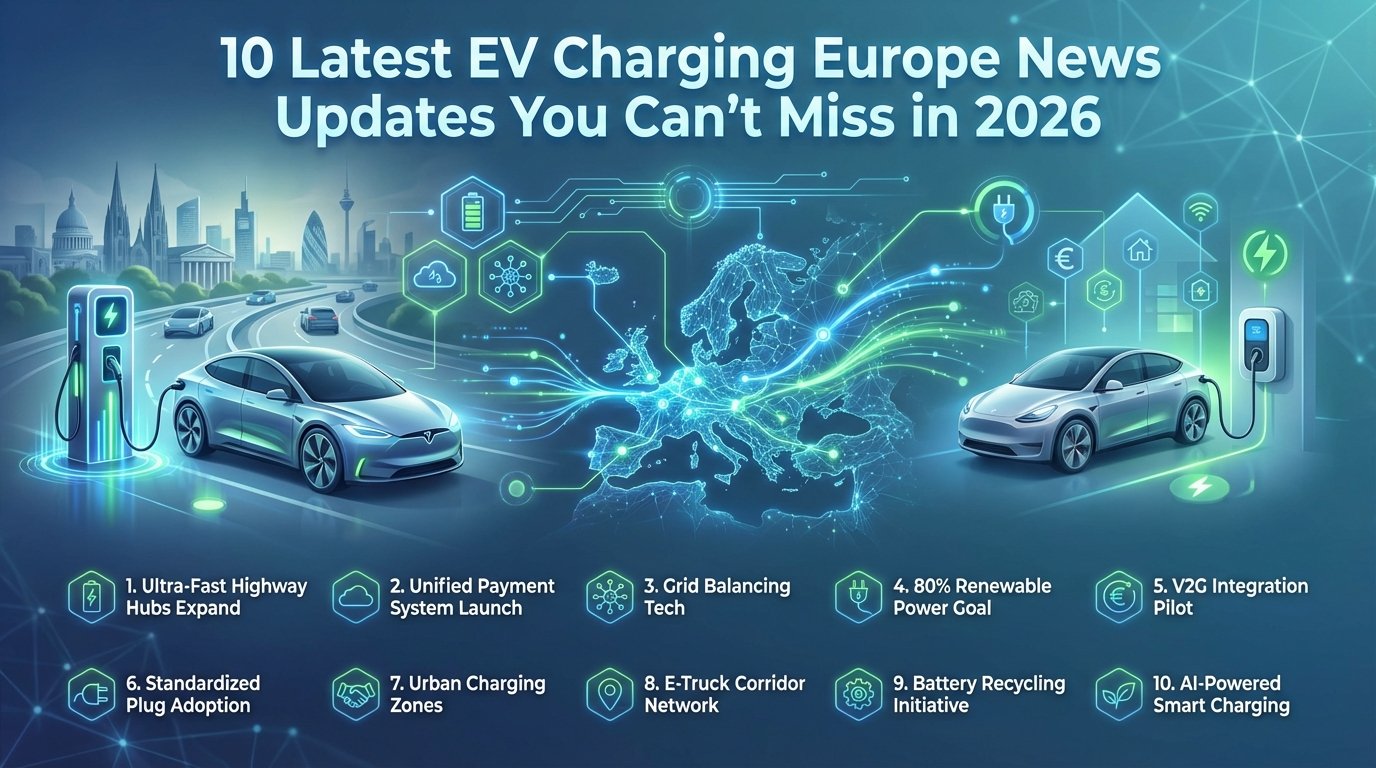
The electric vehicle market is evolving rapidly, and staying updated with the latest ev charging europe news has become more important than ever. From ultra-fast charging stations to smart energy solutions, Europe is leading the way in EV infrastructure development. Whether you are a business owner, EV enthusiast, or simply curious about the future of mobility, these latest updates will help you understand where the industry is heading in 2026.
Table of contents
- Why EV Charging News in Europe Matters
- 1. Ultra-Fast Charging Networks Expand Across Europe
- 2. EU Mandates More Charging Stations by 2030
- 3. Wireless EV Charging Gains Momentum
- 4. Smart Charging Technology Becomes Standard
- 5. Renewable Energy Integration in Charging Stations
- 6. EV Charging Costs Become More Transparent
- 7. Growth of Private and Home Charging Solutions
- 8. Cross-Border Charging Becomes Seamless
- 9. AI and Data Improve Charging Efficiency
- 10. Major Investments from Automakers and Energy Companies
- Key Trends Shaping EV Charging in Europe
- Frequently Asked Questions (FAQs)
- Conclusion
Why EV Charging News in Europe Matters
Europe is one of the fastest-growing EV markets in the world. The region’s strong environmental policies, combined with rapid technological innovation, make it a global leader in electric mobility.
Key reasons to follow EV charging developments:
- Governments are setting strict emission targets
- EV adoption is increasing every year
- Charging infrastructure is expanding rapidly
- New technologies are improving charging speed and convenience
1. Ultra-Fast Charging Networks Expand Across Europe
One of the biggest highlights in ev charging europe news is the expansion of ultra-fast charging networks.
What’s new?
- Charging stations offering 350 kW+ speeds are becoming more common
- Major highways are now equipped with fast chargers every few kilometers
- Charging time has reduced to 15–20 minutes for 80% charge
Why it matters
- Reduces range anxiety
- Makes EVs more practical for long-distance travel
2. EU Mandates More Charging Stations by 2030
The European Union has introduced stricter regulations to boost EV infrastructure.
Key updates
- Mandatory charging stations every 60 km on major highways
- Increased funding for public charging projects
- Focus on rural and underserved areas
This policy is a major step in ensuring equal access to EV charging across Europe.
3. Wireless EV Charging Gains Momentum
Wireless or inductive charging is no longer just an idea—it’s becoming reality.
Developments in 2026
- Pilot projects in cities like Oslo and Berlin
- Roads with built-in charging technology
- No need for cables or plugs
Benefits
- More convenient charging
- Ideal for public transport and taxis
4. Smart Charging Technology Becomes Standard
Smart charging is transforming how EV owners interact with charging stations.
Features include:
- Mobile app integration
- Real-time pricing updates
- Load balancing to avoid grid overload
Impact
- Saves energy and cost
- Improves grid efficiency
5. Renewable Energy Integration in Charging Stations
Sustainability is at the core of EV adoption, and charging stations are now going green too.
Latest trends
- Solar-powered charging stations
- Wind energy integration
- Battery storage systems
This ensures that EVs are truly eco-friendly from charging to driving.
6. EV Charging Costs Become More Transparent
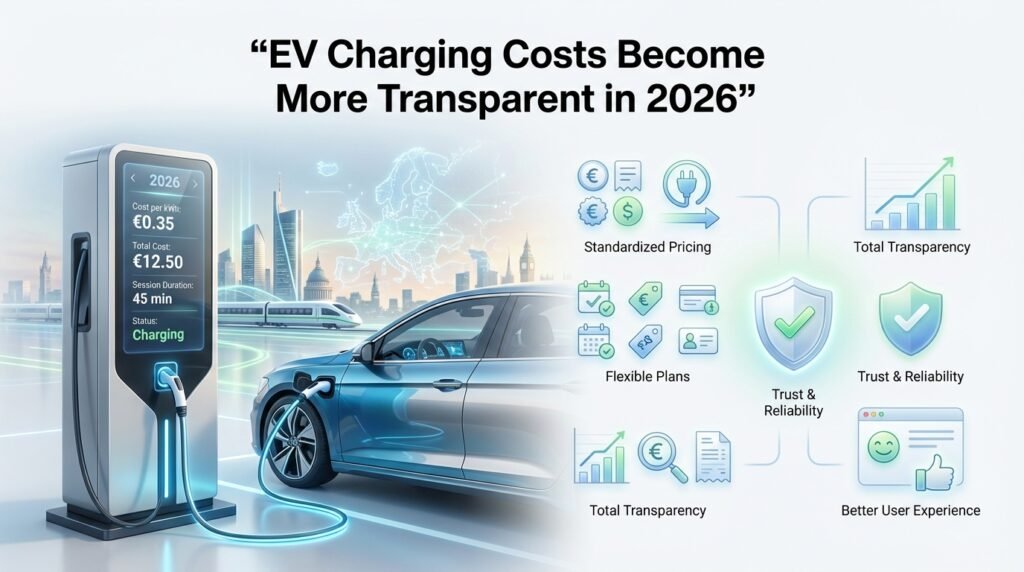
One of the major concerns for EV users has been unclear pricing. In 2026, that’s changing.
New improvements
- Standardized pricing models across networks
- Clear cost display before charging
- Subscription-based charging plans
Result
- Better user experience
- Increased trust in EV charging services
7. Growth of Private and Home Charging Solutions
While public charging is expanding, home charging is also booming.
Key updates
- Faster home chargers (up to 22 kW)
- Government subsidies for installation
- Smart home integration
Why it’s important
- Convenient overnight charging
- Reduces reliance on public stations
8. Cross-Border Charging Becomes Seamless
Traveling across European countries with an EV is now easier than ever.
What’s new?
- Roaming agreements between charging networks
- One app or card for multiple countries
- Unified payment systems
This is a major step toward a truly connected EV ecosystem.
9. AI and Data Improve Charging Efficiency
Artificial Intelligence is playing a big role in EV charging optimization.
Applications
- Predicting charging demand
- Optimizing station locations
- Reducing waiting times
Benefits
- Faster service
- Better infrastructure planning
10. Major Investments from Automakers and Energy Companies
Big players are investing billions into EV charging infrastructure.
Key highlights
- Automakers building their own charging networks
- Energy companies entering the EV market
- Public-private partnerships increasing
Impact
- Faster expansion of charging stations
- More competition and innovation
Key Trends Shaping EV Charging in Europe
Here’s a quick overview of the biggest trends:
- ⚡ Ultra-fast charging becoming the norm
- 🌱 Green energy powering charging stations
- 📱 Smart and app-based charging systems
- 🌍 Seamless cross-border charging
- 🤖 AI-driven infrastructure improvements
Frequently Asked Questions (FAQs)
The latest updates include ultra-fast charging expansion, wireless charging trials, and EU regulations mandating more charging stations.
Modern ultra-fast chargers can deliver up to 350 kW, charging most EVs to 80% in about 15–20 minutes.
Yes, Europe is rapidly expanding its charging network, with new stations being added across highways, cities, and rural areas.
Many new stations use solar and wind energy, making EV charging more sustainable.
Yes, cross-border charging is now more seamless thanks to roaming agreements and unified payment systems.
Home charging is convenient, cost-effective, and increasingly popular due to government incentives.
Smart charging uses technology to optimize energy use, reduce costs, and improve charging efficiency through apps and automation.
Conclusion
The EV industry in Europe is evolving at an incredible pace, and 2026 is proving to be a landmark year. From ultra-fast chargers to AI-powered systems, the latest ev charging europe news highlights a future where electric mobility is not only practical but also highly efficient and sustainable.
Whether you’re planning to buy an EV, invest in the market, or simply stay informed, these updates give you a clear picture of where things are headed.
Final takeaway:
Europe is building a smarter, faster, and greener EV charging ecosystem—and the best is yet to come.