


Table of contents
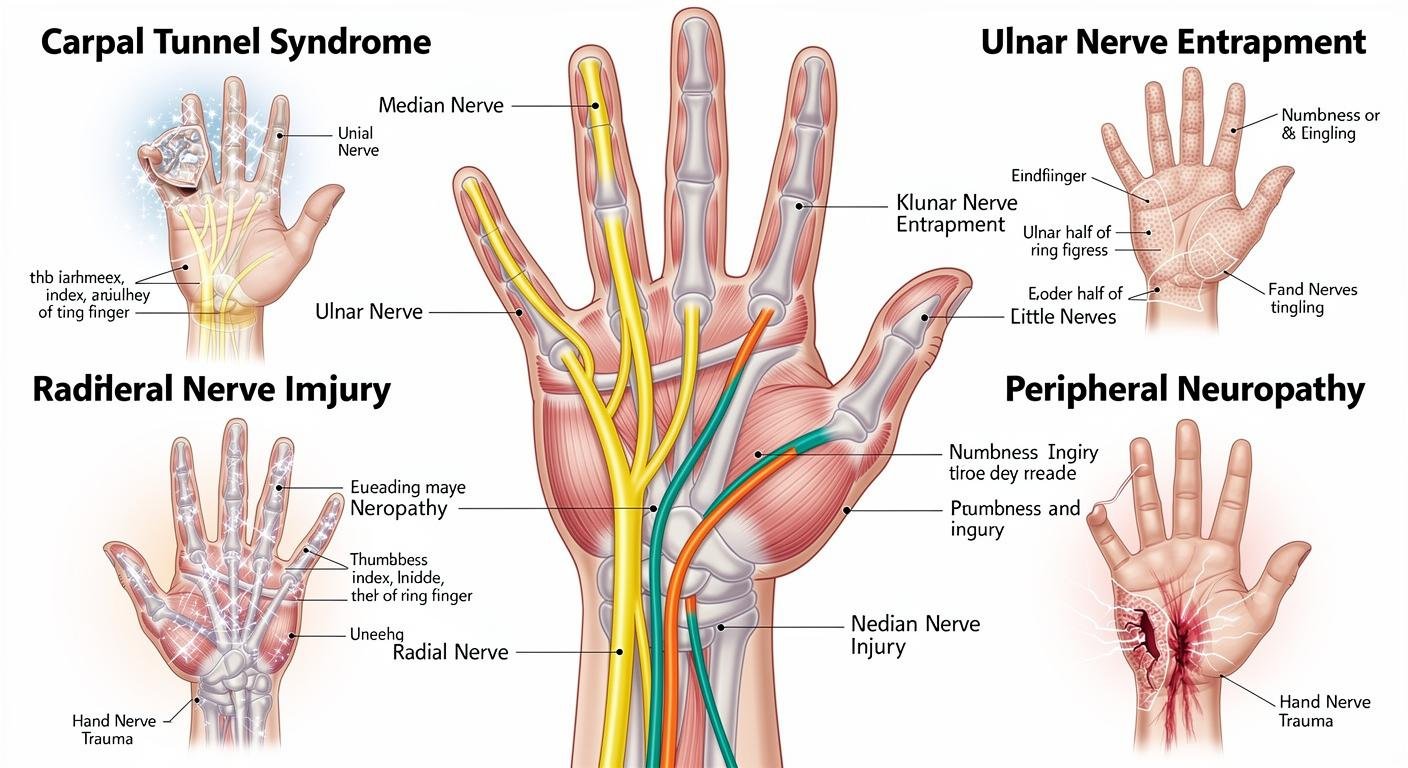
The human hand is an extraordinary structure, capable of performing delicate and precise movements while also providing strength for gripping and lifting. Its versatility is largely due to the complex network of nerves in the hand, which control sensation, movement, and coordination. However, these nerves can sometimes become compressed, damaged, or irritated, leading to pain, numbness, and tingling—symptoms that can significantly affect daily activities.
In this comprehensive guide, we will explore the anatomy of hand nerves, the causes of nerve-related symptoms, common conditions, diagnosis, treatment options, and prevention strategies. This article is also structured to be SEO-friendly and informative for readers seeking solutions to hand nerve issues.
Anatomy of Hand Nerves
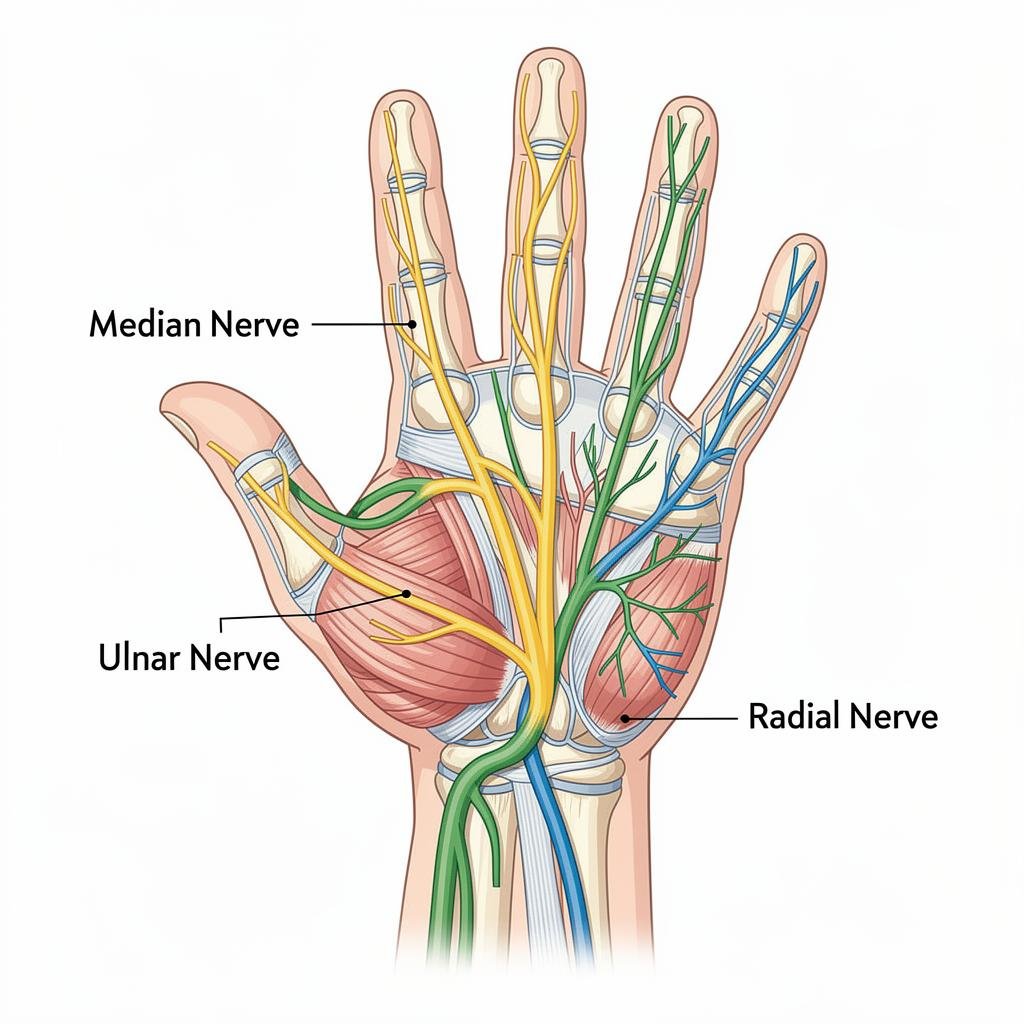
Understanding hand nerve problems starts with the basic anatomy of the nerves in the hand. The hand receives its nerve supply primarily from three major nerves:
- Median Nerve
- Ulnar Nerve
- Radial Nerve
These nerves originate from the brachial plexus, a network of nerves in the neck and shoulder, and travel down the arm into the hand.
1. Median Nerve
- Pathway: Runs down the center of the forearm and enters the hand via the carpal tunnel.
- Functions: Controls thumb opposition, finger flexion, and provides sensation to the thumb, index, middle, and half of the ring finger.
- Clinical Relevance: Compression of the median nerve results in carpal tunnel syndrome, which is a common cause of hand numbness and tingling.
2. Ulnar Nerve
- Pathway: Travels along the inner arm, passing behind the elbow (the “funny bone”) to reach the hand.
- Functions: Controls fine finger movements, grip strength, and provides sensation to the little finger and half of the ring finger.
- Clinical Relevance: Compression leads to ulnar nerve entrapment, which can cause numbness, weakness, and a claw-like deformity in the hand.
3. Radial Nerve
- Pathway: Runs along the back of the arm and forearm, reaching the back of the hand.
- Functions: Controls wrist and finger extension and provides sensation to part of the back of the hand.
- Clinical Relevance: Injury may cause wrist drop, making it difficult to lift the hand and extend fingers.
Common Symptoms of Hand Nerve Problems
Nerve issues in the hand can manifest in various ways, including:
- Numbness: Loss of sensation, often in specific fingers.
- Tingling or “pins and needles”: A common symptom of nerve compression or irritation.
- Pain: Can range from mild discomfort to sharp, shooting pain.
- Weakness: Difficulty gripping objects or performing fine motor tasks.
- Clumsiness or coordination issues: Dropping items due to loss of control.
The location and type of symptoms can help identify which nerve is affected.
Causes of Pain, Numbness & Tingling in the Hand
Several factors can lead to hand nerve problems. The most common causes include:
1. Nerve Compression
Compression or entrapment occurs when a nerve is pressed by surrounding tissues, bones, or tendons. Key examples include:
- Carpal Tunnel Syndrome: Compression of the median nerve at the wrist.
- Ulnar Nerve Entrapment: Pressure on the ulnar nerve at the elbow or wrist.
- Radial Tunnel Syndrome: Compression of the radial nerve near the forearm.
Symptoms: Numbness, tingling, and pain in specific fingers, often worse at night.
2. Trauma or Injury
Injuries such as cuts, burns, fractures, or crush injuries can directly damage nerves in the hand.
Symptoms: Sudden loss of sensation, muscle weakness, chronic pain, or abnormal sensations like burning or tingling.
3. Repetitive Strain
Overuse of the hands through typing, gaming, texting, or heavy manual labor can strain nerves.
Symptoms: Gradual onset of tingling, numbness, and hand fatigue, commonly associated with carpal tunnel syndrome.
4. Systemic Conditions
Certain medical conditions can affect nerve health:
- Diabetes: Causes peripheral neuropathy, damaging nerves over time.
- Vitamin Deficiencies: Especially vitamin B12 deficiency, which impairs nerve function.
- Alcoholism: Chronic alcohol use can cause nerve degeneration.
- Autoimmune Diseases: Conditions like rheumatoid arthritis may compress or inflame nerves.
Symptoms: Persistent burning, tingling, numbness, or weakness in both hands.
5. Infections and Inflammation
Infections like herpes zoster (shingles) or inflammation from tenosynovitis can irritate nerves.
Symptoms: Localized pain, tingling, or sensitivity along the affected nerve pathway.
Common Hand Nerve Conditions
Here is a detailed look at the most frequent conditions affecting hand nerves:
1. Carpal Tunnel Syndrome
- Cause: Compression of the median nerve within the carpal tunnel.
- Symptoms: Tingling, numbness, hand weakness, pain worse at night.
- Risk Factors: Repetitive hand movements, prolonged typing, pregnancy, diabetes.
- Treatment: Wrist splints, anti-inflammatory medications, corticosteroid injections, surgery in severe cases.
2. Ulnar Nerve Entrapment
- Cause: Pressure on the ulnar nerve at the elbow or wrist.
- Symptoms: Numbness in little and ring fingers, weak grip, claw hand in advanced cases.
- Treatment: Activity modification, physical therapy, nerve decompression surgery.
3. Radial Nerve Injury
- Cause: Trauma, fractures, prolonged pressure.
- Symptoms: Wrist drop, difficulty straightening fingers, loss of sensation on the back of the hand.
- Treatment: Splinting, physical therapy, surgical repair if needed.
4. Peripheral Neuropathy
- Cause: Diabetes, vitamin deficiencies, alcohol abuse, infections.
- Symptoms: Burning pain, tingling, loss of sensation.
- Treatment: Managing underlying conditions, medications for nerve pain, lifestyle changes.
5. Hand Nerve Trauma
- Cause: Cuts, burns, crush injuries.
- Symptoms: Sudden loss of sensation, muscle weakness, chronic pain.
- Treatment: Surgical repair, rehabilitation therapy.
Diagnosis of Hand Nerve Issues
A doctor may perform:
- Physical Examination: Checking sensation, strength, and reflexes.
- Nerve Conduction Studies: Measuring how quickly nerves transmit signals.
- Electromyography (EMG): Evaluates electrical activity of muscles.
- Imaging: MRI or ultrasound to detect structural causes.
Early diagnosis is crucial to prevent permanent damage.
Treatment Options
Non-Surgical Treatments
- Rest and activity modification
- Physical therapy and exercises
- Anti-inflammatory medications
- Wrist or elbow splints
Surgical Treatments
- Carpal tunnel release
- Nerve decompression
- Nerve grafting or repair
Recovery Time: Weeks to months, depending on severity.
Prevention of Hand Nerve Problems
- Maintain ergonomic hand and wrist posture
- Take breaks from repetitive activities
- Perform stretching and strengthening exercises
- Manage chronic conditions like diabetes
- Avoid prolonged pressure on elbows, wrists, or hands
When to See a Doctor
Consult a medical professional if you experience:
- Persistent numbness or tingling
- Weakness or loss of grip
- Pain interfering with daily activities
- Clumsiness or coordination problems
Early intervention can prevent long-term nerve damage.
FAQs: Nerves in the Hand
1. How many nerves are in the hand?
Primarily three major nerves: median, ulnar, and radial nerves.
2. Why do my hands tingle at night?
Nighttime tingling is often due to carpal tunnel syndrome or nerve compression during sleep.
3. Can nerve damage in the hand heal?
Mild nerve damage can heal over time. Severe injuries may require surgery and rehabilitation.
4. Which vitamin deficiency causes hand tingling?
Vitamin B12 deficiency is a common cause of peripheral neuropathy.
5. Is hand numbness always serious?
Occasional numbness may be temporary. Persistent symptoms should be evaluated by a doctor.
6. How long does nerve recovery take?
Recovery varies: from weeks for mild compression to months for severe injury.
7. What home remedies help hand nerve pain?
- Wrist splints
- Gentle stretching
- Ergonomic adjustments
- Cold/heat therapy
- Reducing repetitive strain
Conclusion
The nerves in the hand are vital for sensation, movement, and coordination. Pain, numbness, or tingling can result from nerve compression, injury, or systemic conditions, affecting your daily life. Recognizing symptoms early, understanding the underlying cause, and seeking proper treatment can preserve hand function and improve quality of life.
With proper prevention, ergonomic practices, and timely medical care, most hand nerve problems can be effectively managed or avoided entirely. If you experience persistent symptoms, consulting a healthcare professional is the best step toward relief and recovery.