


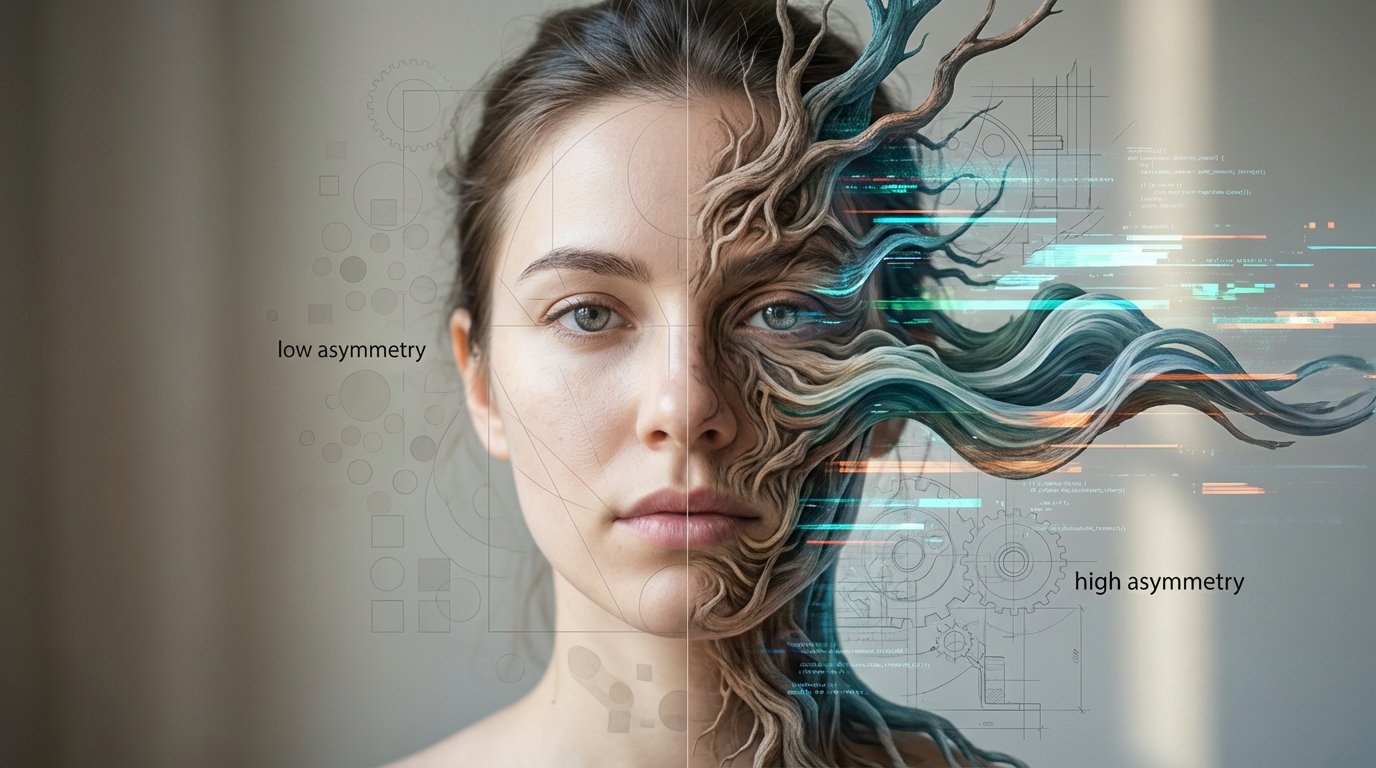
Asymmetry is a concept that defines the lack of symmetry or balance in objects, systems, or structures. While symmetry conveys harmony and stability, asymmetry introduces variation, uniqueness, and functionality. In different fields such as biology, design, mathematics, and technology, asymmetry is often classified as high or low depending on the degree of imbalance. Understanding the differences between high and low asymmetry is essential for designers, engineers, researchers, and anyone interested in the natural or man-made world.
Table of contents
What Is Asymmetry?
Asymmetry occurs when an object, system, or structure cannot be divided into identical halves. Unlike symmetry, which emphasizes balance, asymmetry highlights variation in shape, size, position, or proportion.
The degree of asymmetry determines whether it is considered high or low:
- High asymmetry – extreme imbalance or unevenness between parts.
- Low asymmetry – minor variations or subtle differences that do not drastically affect balance or function.
Understanding these differences allows us to apply asymmetry intentionally in art, design, and natural sciences.
Key Differences Between High and Low Asymmetry
| Feature | High Asymmetry | Low Asymmetry |
|---|---|---|
| Definition | Significant imbalance, large variations between parts | Minor imbalance, small variations, almost symmetrical |
| Visual Impact | Eye-catching, bold, dramatic | Subtle, harmonious, less noticeable |
| Occurrence in Nature | Rare but functional, like uneven animal features or extreme landscapes | Common, like slight facial differences or leaf arrangements |
| Design Use | Modern architecture, abstract art, asymmetrical logos | Minimalist design, interior layouts, gentle visual flow |
| Functionality | May alter performance for specific tasks | Maintains stability and basic functionality |
| Emotional Effect | Dynamic, exciting, unconventional | Calm, comfortable, predictable |
Examples of High Asymmetry
High asymmetry is often dramatic and immediately noticeable. It creates visual tension or functional advantages in certain contexts.
Common Examples Include:
- Architecture: Buildings with uneven facades or unconventional shapes, like the Guggenheim Museum in Bilbao.
- Art: Abstract paintings or sculptures with irregular compositions.
- Nature: Animals with pronounced asymmetrical features, like fiddler crabs with one large claw.
- Technology: Asymmetrical circuit designs in specialized electronics for optimization.
High asymmetry often draws attention and can communicate innovation, power, or creativity.
Low Asymmetry
Low asymmetry is subtle and often goes unnoticed. It enhances natural realism and introduces variation without disrupting balance.
Common Examples Include:
- Human Features: Slight differences between the left and right sides of the face.
- Leaves and Flowers: Small variations in size and arrangement for natural efficiency.
- Everyday Objects: Minor inconsistencies in handcrafted items or ergonomic products.
- Sports Equipment: Slight asymmetry in tennis racquets or golf clubs to improve control.
Low asymmetry helps maintain comfort, stability, and aesthetic appeal.
Applications of High vs Low Asymmetry

1. In Nature
- High Asymmetry: Found in animals that rely on a dominant side or uneven appendages for survival. Example: crabs with one oversized claw.
- Low Asymmetry: Most plants and animals exhibit low asymmetry, such as slightly uneven wings in birds or minor facial differences in humans.
2. In Design
- High Asymmetry: Modern art, digital interfaces, and architecture use high asymmetry to create unique, dynamic designs.
- Low Asymmetry: Product design and interior spaces often use low asymmetry for a subtle, elegant look.
3. In Technology
- High Asymmetry: Circuit layouts, robotics, and specialized tools that need one-sided optimization.
- Low Asymmetry: Everyday electronics and ergonomic devices that maintain balance while incorporating slight functional differences.
Benefits of High and Low Asymmetry
High Asymmetry:
- Captures attention and stands out visually.
- Encourages creativity and innovation.
- Can improve specialized performance in functional designs.
Low Asymmetry:
- Provides realism and natural variation.
- Maintains comfort and usability.
- Creates subtle visual interest without overwhelming viewers.
How to Identify High vs Low Asymmetry
Checklist for Designers and Analysts:
- Compare left and right sides visually or using measurements.
- Evaluate functional impact—does the imbalance enhance performance or just create visual difference?
- Consider context—high asymmetry may be suitable for bold statements; low asymmetry works for natural realism.
- Observe patterns in nature or human-made objects to determine typical ranges of variation.
Key Considerations
Visual Design Considerations
- Balance eye-catching asymmetry with usability.
- Use high asymmetry for focal points, low asymmetry for supporting elements.
- Maintain color harmony to reduce visual strain.
Biological Considerations
- Identify functional asymmetry in organs or limbs.
- Note evolutionary advantages of high asymmetry.
- Recognize that low asymmetry contributes to overall stability.
Engineering and Technology Considerations
- Assess load distribution in asymmetrical designs.
- Use high asymmetry for task-specific optimization.
- Ensure low asymmetry maintains comfort and efficiency.
FAQs About High vs Low Asymmetry
Q1: What is the difference between high and low asymmetry?
High asymmetry refers to significant imbalance, whereas low asymmetry is subtle and almost symmetrical.
Q2: Which is more common in nature?
Low asymmetry is far more common, as small variations help organisms function efficiently without causing instability.
Q3: Can high asymmetry be functional?
Yes, high asymmetry is often used in tools, animals, and designs where unevenness improves performance.
Q4: Is asymmetry only relevant to visual design?
No, asymmetry appears in biology, engineering, mathematics, technology, and almost every field.
Q5: How can I use asymmetry in my designs?
Use high asymmetry to create focal points and dynamic effects; use low asymmetry for subtle realism and natural appeal.
Conclusion
Understanding high vs low asymmetry allows professionals and enthusiasts to make informed decisions in design, biology, technology, and art. High asymmetry offers boldness, creativity, and functional advantages, while low asymmetry brings subtle realism, comfort, and visual harmony. By observing and applying these principles, you can create balanced yet dynamic systems that resonate with nature, technology, and human perception.
For a deeper dive into the concept of asymmetry, visit Wikipedia’s page on Asymmetry
Visit our Home Page for more insightful articles on design, science, and innovation.