


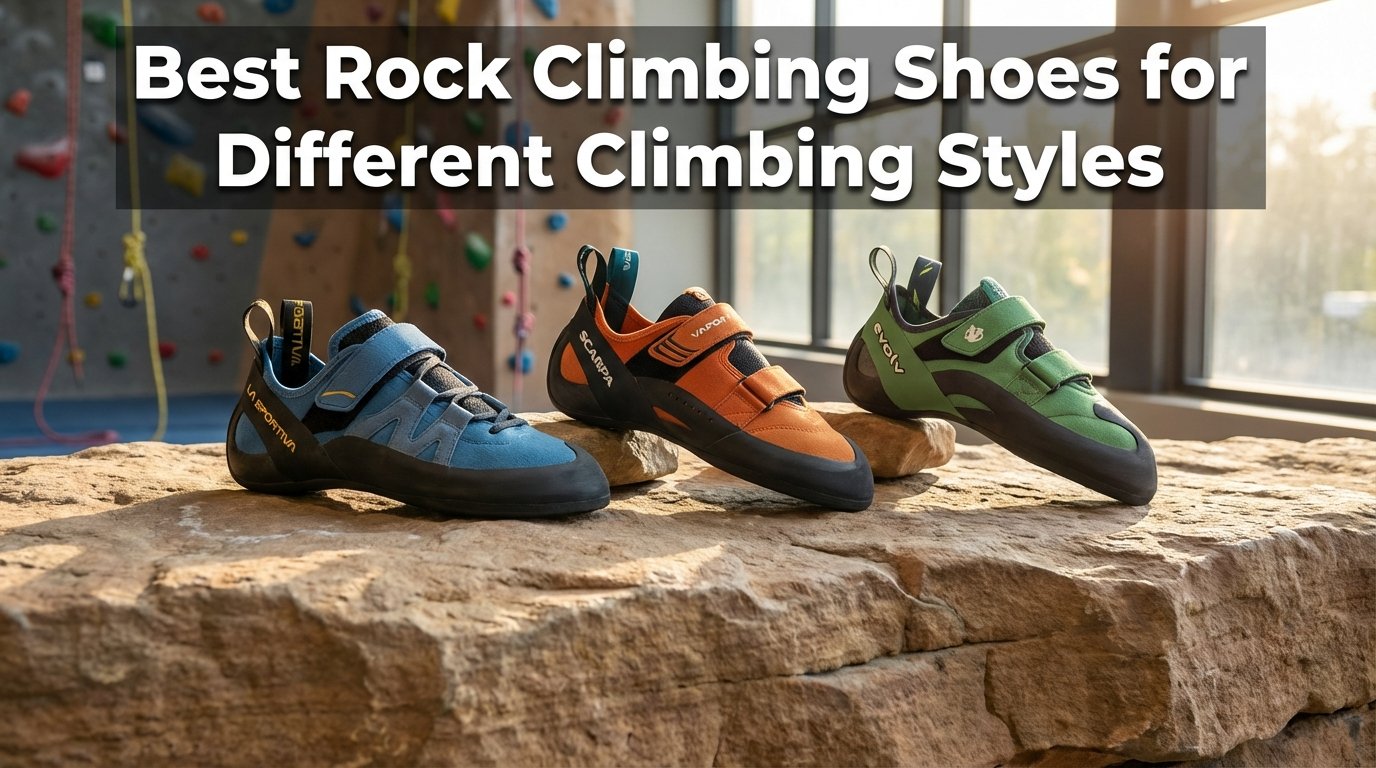
Rock climbing is an exhilarating sport that combines physical strength, mental focus, and technical skill. One of the most important aspects of successful climbing is choosing the right shoes. Rock climbing shoes are not all the same—they are designed to support different climbing styles, from indoor gym climbing to steep outdoor bouldering. This guide explores the best rock climbing shoes for different climbing styles, helping climbers of all levels make informed decisions about fit, comfort, and performance.
Why Choosing the Right Climbing Shoes Matters
Climbing shoes are the foundation of good footwork, which is essential for stability, balance, and efficiency. The right pair enhances your grip, allows precise foot placements, and reduces fatigue. On the other hand, poorly chosen shoes can lead to discomfort, blisters, or limited performance, especially when attempting challenging routes. Different climbing styles require different shoe characteristics:
- Bouldering: Needs precise toe placement and aggressive downturned shoes for steep problems.
- Sport Climbing: Requires a balance of comfort and performance for longer climbs.
- Trad Climbing: Emphasizes all-day comfort for multi-pitch routes.
- Indoor Climbing: Versatile, moderately tight shoes for gym routes and varied holds.
Understanding the style-specific features of climbing shoes is essential for beginners and advanced climbers alike.
Types of Rock Climbing Shoes by Style
Rock climbing shoes are generally categorized by their shape, stiffness, and aggressiveness. Below is a detailed table summarizing the main types and their ideal climbing styles:
| Shoe Type | Shape & Design | Best For Climbing Style | Comfort Level |
|---|---|---|---|
| Neutral | Flat profile, relaxed fit | Trad, beginner indoor climbing | High |
| Moderate | Slightly downturned toe | Sport climbing, mixed routes | Medium |
| Aggressive | Strong downturn, tight fit | Bouldering, steep overhangs | Low |
Neutral shoes offer maximum comfort for long climbs and multi-pitch adventures. Moderate shoes strike a balance between performance and comfort, suitable for varied sport routes. Aggressive shoes focus on precision and toe power, ideal for overhangs and technical boulder problems.
Best Rock Climbing Shoes for Different Styles
1. Bouldering Shoes
Bouldering is typically done on shorter routes but requires powerful, precise foot placements. Aggressive climbing shoes are the best choice for bouldering:
- Features: Downturned shape, tight fit, sticky rubber for toe hooks and edges.
- Recommended Use: Short, technical problems indoors or on rock.
- Top Picks: La Sportiva Solution, Five Ten Hiangle, Scarpa Drago.
List of key benefits for bouldering shoes:
- Excellent toe precision on small holds.
- Strong heel and toe hooks for overhangs.
- Sticky rubber ensures grip on smooth surfaces.
2. Sport Climbing Shoes
Sport climbing involves longer routes with bolted protection. Shoes should balance comfort and performance:
- Features: Moderate downturn, supportive midsole, versatile design.
- Recommended Use: Sport routes on rock or indoor gyms.
- Top Picks: Evolv Shaman, La Sportiva Katana, Scarpa Vapor V.
List of advantages:
- Comfortable for extended climbing sessions.
- Allows precise edging on vertical or slightly overhanging routes.
- Durable rubber for multi-pitch sport routes.
3. Trad Climbing Shoes
Trad (traditional) climbing requires shoes that can be worn all day with minimal discomfort. Neutral shoes are ideal:
- Features: Flat sole, relaxed fit, soft midsole.
- Recommended Use: Multi-pitch trad routes, long climbs, beginner trad climbing.
- Top Picks: La Sportiva Mythos, Five Ten Anasazi Moccasym, Scarpa Origin.
List of advantages:
- Reduces foot fatigue on long climbs.
- Comfortable for long approaches or multi-pitch climbs.
- Adaptable to a variety of holds and rock types.
4. Indoor Climbing Shoes
Indoor climbing demands versatile shoes that can handle different holds and angles:
- Features: Moderate fit, flexible midsole, sticky rubber.
- Recommended Use: Indoor gyms, mixed indoor routes, training sessions.
- Top Picks: Evolv Defy, La Sportiva Finale, Five Ten Rogue.
List of advantages:
- Easy to wear for beginners and gym climbers.
- Balanced comfort and performance for training.
- Sticky rubber provides reliable grip on gym holds.
How to Choose the Right Shoe for Your Style
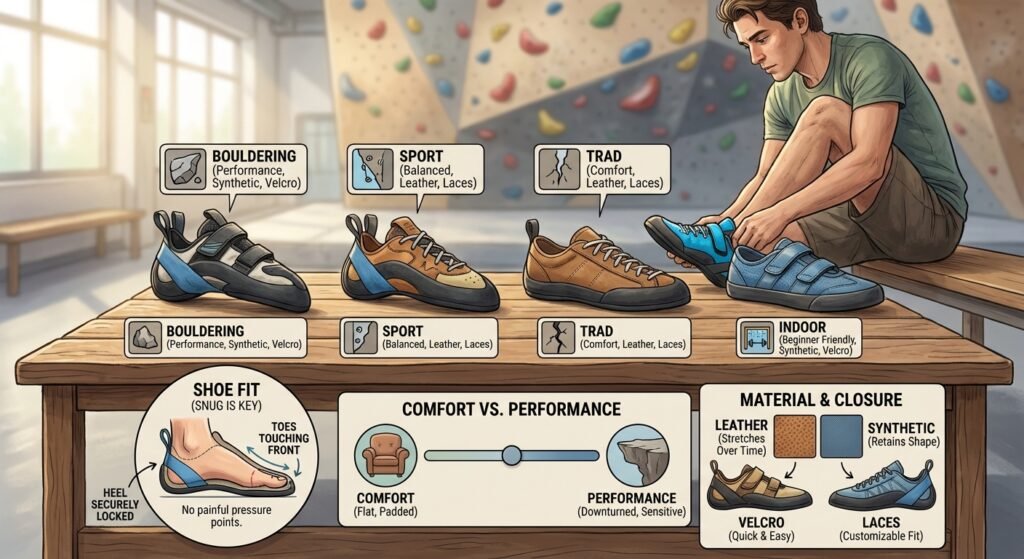
Choosing the best climbing shoe involves considering multiple factors:
- Climbing Style: Determine your primary climbing type—bouldering, sport, trad, or indoor.
- Shoe Fit: Ensure snug fit without extreme pain. Your toes should lightly touch the front of the shoe, and the heel should not slip.
- Comfort vs. Performance: Beginners should prioritize comfort for learning, while advanced climbers can prioritize performance.
- Material: Leather shoes stretch over time for a customized fit; synthetic shoes maintain shape.
- Closure System: Velcro is convenient for quick on/off; laces allow precise adjustments.
Key Features to Look For
Some features are universally important across all climbing styles:
- Sticky rubber soles for maximum grip.
- Supportive midsole for edging and balance.
- Breathable materials for moisture control.
- Durable construction for long-term use.
Common Mistakes to Avoid
Climbers, especially beginners, often make these mistakes:
- Buying aggressive shoes too early, causing pain and limited movement.
- Ignoring proper fit and sizing guidelines.
- Focusing solely on brand or price rather than style and comfort.
- Wearing shoes for long approaches instead of only during climbs.
Caring for Your Climbing Shoes
Proper care ensures longevity and consistent performance:
- Always air dry shoes after climbing.
- Avoid direct sunlight or heaters that damage rubber.
- Clean soles regularly for maximum grip.
- Store shoes in a cool, dry place.
Frequently Asked Questions (FAQs)
Beginner shoes should be snug but not painfully tight. Toes should lightly touch the front without curling sharply
No, synthetic shoes maintain shape. Leather shoes stretch over time, offering a more customized fit
Price does not always equal performance. Shoe selection should focus on fit, climbing style, and comfort rather than brand prestige.
Yes, especially neutral or moderate shoes. Aggressive shoes may wear quickly on rough rock.
Final Thoughts
Choosing the best rock climbing shoes for different climbing styles requires understanding your climbing preferences, prioritizing fit, and balancing comfort with performance. Beginners should focus on neutral or moderately downturned shoes, while advanced climbers can explore aggressive models for bouldering and steep routes. Proper shoe care, sizing, and style selection enhance performance, reduce discomfort, and make every climb enjoyable.
Learn more about climbing gear and expert tips here: https://www.rei.com/learn/expert-advice/rock-climbing-shoes.html
Visit our homepage for additional climbing guides and resources: https://daliybusinessworld.com/