


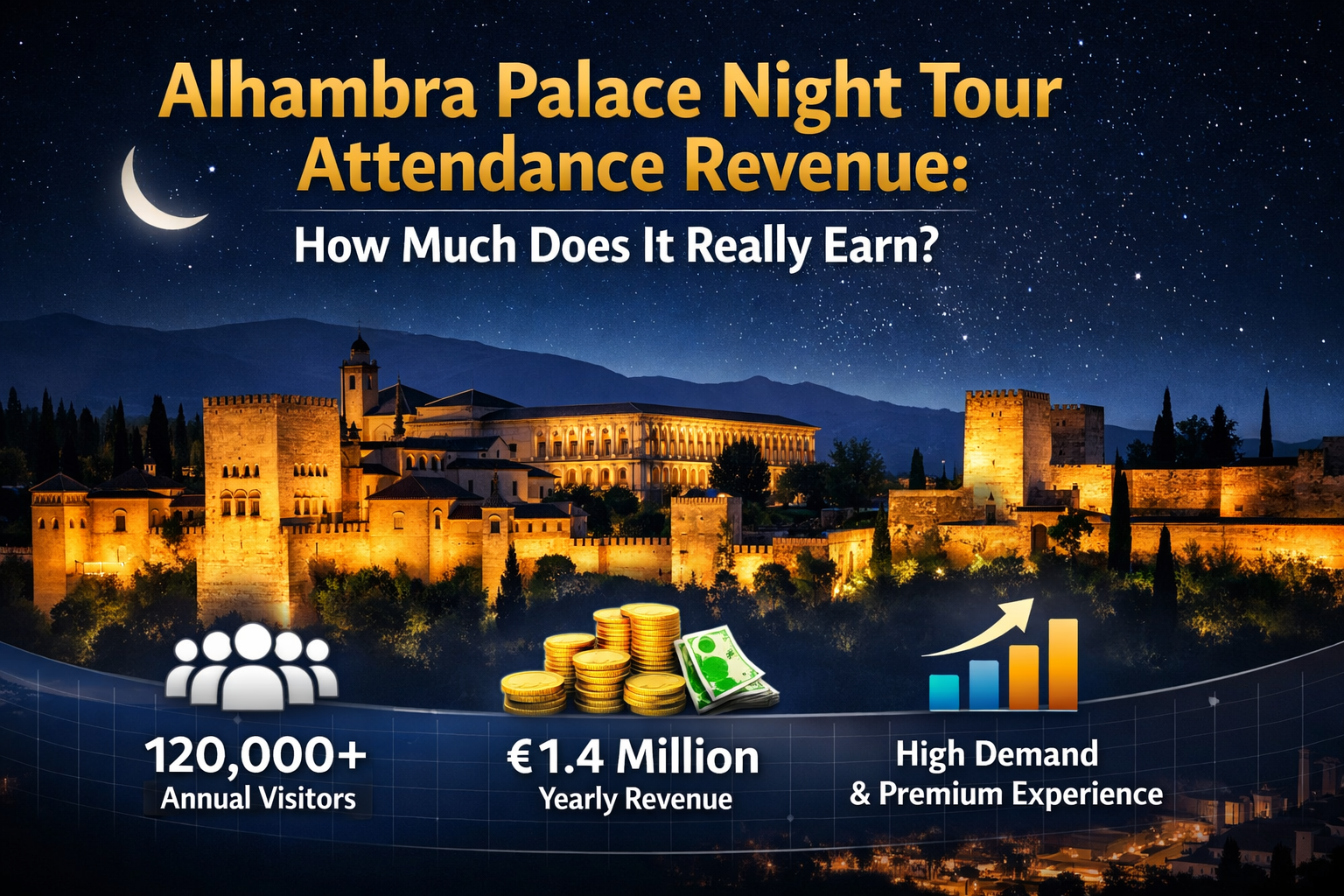
The Alhambra Palace is one of the most visited historical landmarks in Spain and a UNESCO World Heritage Site. While daytime visits attract millions of tourists every year, the Alhambra Palace night tour has become a premium experience that generates significant income.
Many travelers wonder how popular these night tours really are and how much revenue they generate. In this detailed guide, we will break down the Alhambra Palace night tour attendance revenue, explain how the tours work, why they are profitable, and what factors influence their earnings.
Table of contents
- What Is the Alhambra Palace Night Tour?
- Why Night Tours Are So Popular
- Alhambra Palace Night Tour Attendance Overview
- Alhambra Palace Night Tour Ticket Pricing
- Alhambra Palace Night Tour Attendance Revenue Explained
- Additional Revenue Streams From Night Tours
- Seasonal Impact on Attendance and Revenue
- How Night Tours Compare to Day Tours Revenue
- Why the Alhambra Limits Night Tour Attendance
- Economic Importance for Granada
- Future Growth Potential of Night Tours
- Common Myths About Alhambra Night Tours
- Frequently Asked Questions (FAQs)
- 1. What is the Alhambra Palace night tour attendance revenue?
- 2. How many people attend Alhambra night tours each year?
- 3. Are night tour tickets more expensive than day tickets?
- 4. Do night tours include the entire Alhambra complex?
- 5. Are guided night tours available?
- 6. Is night tour revenue important for Alhambra maintenance?
- 7. Do night tours sell out quickly?
- Conclusion: Final Thoughts on Alhambra Palace Night Tour Attendance Revenue
What Is the Alhambra Palace Night Tour?
The Alhambra Palace night tour is a special guided or self-guided experience that allows visitors to explore selected parts of the palace after sunset.
Unlike daytime visits, night tours focus on:
- A quieter atmosphere
- Artistic lighting
- Fewer visitors
- A more exclusive experience
These tours usually include:
- Nasrid Palaces at night
- Generalife Gardens night visit
- Carefully controlled visitor numbers
Because of limited availability and high demand, night tours are priced higher than regular tickets, making them an important revenue stream.
Why Night Tours Are So Popular

Several factors contribute to the growing demand for Alhambra night tours:
Unique Atmosphere
The palace looks completely different at night. Soft lighting highlights architectural details that are easy to miss during the day.
Limited Availability
Night tour tickets are capped daily, which increases demand and perceived value.
Romantic and Cultural Appeal
Couples, photographers, and culture lovers prefer night tours for their peaceful and magical experience.
Cooler Temperatures
In warmer months, night tours are more comfortable than daytime visits.
All these factors directly impact Alhambra Palace night tour attendance revenue.
Alhambra Palace Night Tour Attendance Overview
Average Night Tour Attendance
While daytime visits can exceed 8,000 visitors per day, night tours are intentionally limited.
Estimated attendance figures:
- 300–400 visitors per night
- Around 110,000–140,000 visitors annually
- Strong seasonal variation (higher in spring and summer)
Attendance is carefully controlled to protect the site and ensure a high-quality visitor experience.
Alhambra Palace Night Tour Ticket Pricing
Ticket prices play a major role in revenue generation.
Average Ticket Prices
Night tour prices typically range between:
- €10 to €15 per person
- Discounts for EU citizens, students, and seniors
- Free entry for children under a certain age
Premium guided night tours may cost more.
Alhambra Palace Night Tour Attendance Revenue Explained
Now let’s break down the Alhambra Palace night tour attendance revenue using realistic estimates.
Estimated Annual Revenue Calculation
Let’s assume:
- Average attendance: 120,000 visitors per year
- Average ticket price: €12
Estimated annual revenue:
120,000 × €12 = €1.44 million per year
This is a conservative estimate and does not include guided tours, special events, or seasonal price increases.
Additional Revenue Streams From Night Tours
Beyond ticket sales, night tours generate indirect revenue:
Guided Tour Fees
Professional guided night tours often cost extra and are highly popular.
Tourism Boost
Night tours encourage longer stays in Granada, benefiting:
- Hotels
- Restaurants
- Local transport
- Souvenir shops
Special Cultural Events
Occasionally, exclusive night events or exhibitions are held, increasing earnings.
Seasonal Impact on Attendance and Revenue
High Season (April–September)
- Higher attendance
- Tickets sell out quickly
- Revenue peaks during summer months
Low Season (November–February)
- Fewer visitors
- Reduced schedules
- Still consistent due to cultural tourism
Seasonality helps stabilize annual Alhambra Palace night tour attendance revenue rather than relying on a single peak period.
How Night Tours Compare to Day Tours Revenue
| Tour Type | Average Visitors | Ticket Price | Revenue Impact |
|---|---|---|---|
| Day Tours | Very High | Lower | Main income source |
| Night Tours | Limited | Higher | Premium revenue |
| Guided Tours | Smaller groups | Highest | High value |
Although night tours have lower attendance, their higher pricing makes them extremely valuable.
Why the Alhambra Limits Night Tour Attendance
Revenue is important, but preservation comes first.
Key reasons for limits include:
- Protecting ancient structures
- Preventing overcrowding
- Enhancing visitor experience
- Maintaining UNESCO guidelines
This controlled approach ensures long-term sustainability and steady revenue growth.
Economic Importance for Granada
The Alhambra Palace night tour attendance revenue contributes directly and indirectly to the local economy.
Local Benefits
- Job creation (guides, security, staff)
- Increased nighttime tourism
- Support for local businesses
Night tours help distribute tourist activity beyond daytime hours, reducing congestion.
Future Growth Potential of Night Tours
The demand for cultural night experiences is growing globally.
Possible future developments:
- Expanded night tour schedules
- New themed night experiences
- Enhanced digital ticketing
- Exclusive VIP tours
However, growth will remain balanced with preservation needs.
Common Myths About Alhambra Night Tours
“Night tours are not worth it”
In reality, many visitors prefer night tours over daytime visits.
“Revenue is minimal”
Despite limited numbers, higher ticket prices make night tours very profitable.
“Only tourists attend”
Locals and repeat visitors also enjoy night tours.
Frequently Asked Questions (FAQs)
1. What is the Alhambra Palace night tour attendance revenue?
The estimated annual revenue ranges between €1.3 million and €1.6 million, depending on attendance and ticket prices.
2. How many people attend Alhambra night tours each year?
Approximately 110,000 to 140,000 visitors attend night tours annually.
3. Are night tour tickets more expensive than day tickets?
Yes, night tour tickets are usually priced higher due to limited availability and exclusive access.
4. Do night tours include the entire Alhambra complex?
No, night tours usually focus on the Nasrid Palaces or Generalife Gardens, not the full complex.
5. Are guided night tours available?
Yes, guided night tours are available and often cost more than standard tickets.
6. Is night tour revenue important for Alhambra maintenance?
Absolutely. Night tour revenue helps fund conservation, staff, and preservation efforts.
7. Do night tours sell out quickly?
Yes, especially during peak tourist seasons, tickets often sell out days or weeks in advance.
Conclusion: Final Thoughts on Alhambra Palace Night Tour Attendance Revenue
The Alhambra Palace night tour attendance revenue proves that quality experiences can be just as profitable as high-volume tourism. By limiting visitor numbers and offering a premium experience, the Alhambra generates over €1.4 million annually from night tours alone.
More importantly, this revenue supports conservation, enhances visitor satisfaction, and strengthens Granada’s cultural tourism economy. Night tours are not just a magical experience—they are a smart and sustainable revenue model.
For travelers, they offer unforgettable memories. For heritage management, they provide a balanced way to protect history while generating income.