


Table of contents
- 1. What is a Liquid Bandage?
- 2. What Are the Uses of a Liquid Bandage?
- 3. What Are the Benefits of Using a Liquid Bandage?
- 4. How Does a Liquid Bandage Work?
- 5. How to Apply a Liquid Bandage Properly
- 6. Common Mistakes to Avoid
- 7. Can Liquid Bandages Be Used on Children?
- 8. Are Liquid Bandages Safe for Everyone?
- 9. How Long Does a Liquid Bandage Last?
- 10. Can Liquid Bandages Replace Traditional Bandages?
- 11. Liquid Bandage vs. Traditional Bandage
- 12. Can Liquid Bandages Prevent Scarring?
- 13. Are There Different Types of Liquid Bandages?
- 14. Tips for Maximizing Liquid Bandage Benefits
- 15. Liquid Bandage for Everyday Use
- 16. SEO-Friendly Summary: Liquid Bandage Key Takeaways
- Conclusion
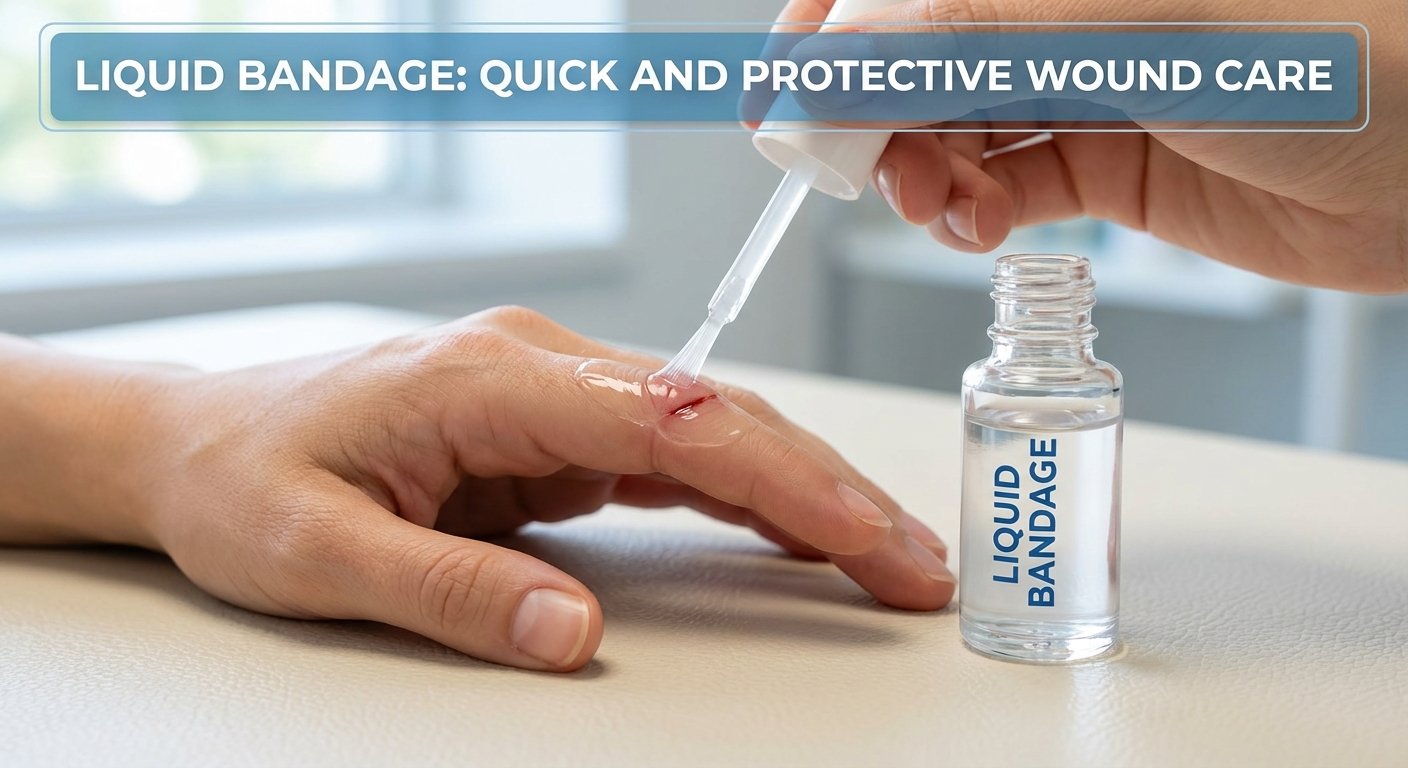
Liquid bandage are an innovative solution in modern first aid. Unlike traditional adhesive bandages, liquid bandages form a protective layer over cuts, scrapes, and minor wounds, helping prevent infection and promoting healing. In this detailed FAQ guide, we’ll explore everything you need to know about liquid bandages, including uses, benefits, proper application, and safety tips.
1. What is a Liquid Bandage?
A liquid bandage is a topical medical adhesive that forms a protective film over minor cuts, scrapes, and abrasions. Unlike traditional bandages, it does not require gauze or adhesive strips. Liquid bandages are usually made from cyanoacrylate compounds, polymers, or natural healing agents, depending on the brand. When applied, they quickly dry to create a waterproof, flexible layer that protects the wound.
Key Features:
- Transparent or slightly tinted
- Flexible and waterproof
- Antibacterial properties in some formulations
- Quick-drying and painless application
- Ideal for small cuts, blisters, or abrasions
2. What Are the Uses of a Liquid Bandage?
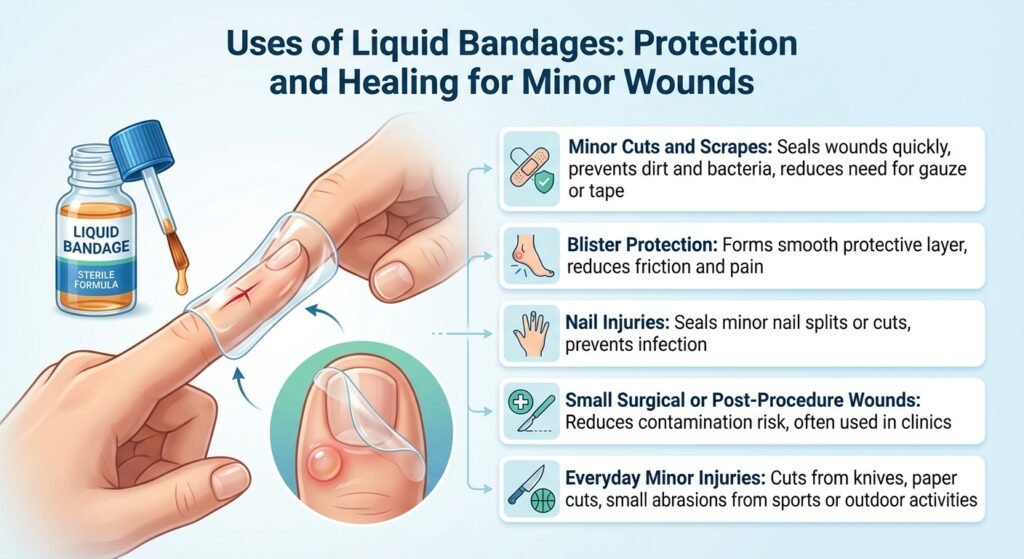
Liquid bandages are versatile and can be used in many scenarios:
a) Minor Cuts and Scrapes
- Seals small wounds quickly
- Prevents dirt and bacteria from entering
- Reduces the need for traditional gauze and tape
b) Blister Protection
- Forms a smooth, protective layer over blisters
- Reduces friction and pain while walking or using hands
c) Nail Injuries
- Seals minor nail splits or small cuts around fingernails and toenails
- Helps prevent infection while the nail heals
d) Small Surgical or Post-Procedure Wounds
- Often used in clinics for small incisions
- Reduces risk of wound contamination
e) Everyday Minor Injuries
- Cuts from kitchen knives or tools
- Paper cuts
- Small abrasions from sports or outdoor activities
3. What Are the Benefits of Using a Liquid Bandage?
Liquid bandages offer unique advantages over traditional adhesive bandages:
a) Waterproof Protection
- Unlike standard bandages, liquid bandages protect wounds from water, allowing washing hands or showering without compromising the wound.
b) Flexibility
- The protective film moves with the skin, making it ideal for joints, fingers, and other moving areas.
c) Reduced Infection Risk
- Many formulations include antibacterial agents that reduce the chance of infection.
d) Pain-Free Application
- No sticky tapes or bandage removal is needed, reducing pain and irritation.
e) Aesthetic Appearance
- Transparent liquid bandages are discreet and often invisible on the skin.
f) Promotes Faster Healing
- By protecting the wound from dirt and bacteria, it can heal more efficiently.
4. How Does a Liquid Bandage Work?
Liquid bandages work by forming a protective layer over the wound, which:
- Seals the wound – Prevents bacteria, dirt, and water from entering.
- Maintains moisture balance – Keeps the wound slightly moist, which is ideal for healing.
- Supports tissue regeneration – Some liquid bandages contain compounds that stimulate skin cell growth.
- Forms a flexible barrier – The film moves with the skin, protecting delicate areas like fingers or elbows.
5. How to Apply a Liquid Bandage Properly
Proper application ensures maximum effectiveness:
1: Clean the Wound
- Wash the area with soap and water.
- Remove dirt, debris, or small particles.
- Pat dry gently with a clean towel.
2: Prepare the Area
- Avoid touching the wound with fingers.
- For large cuts, consider applying a thin layer first and letting it dry.
3: Apply the Liquid Bandage
- Shake the bottle if required.
- Apply a thin layer directly over the wound.
- Ensure complete coverage without spilling onto healthy skin.
4: Allow to Dry
- Usually dries within 30–60 seconds.
- Avoid touching or flexing the area until dry.
5: Reapply if Needed
- Some liquid bandages wear off after a day or two.
- Reapply as necessary until the wound is fully healed.
6. Common Mistakes to Avoid
- Applying over dirty or wet wounds – may trap bacteria.
- Using on deep or heavily bleeding cuts – liquid bandage is only for minor wounds.
- Applying too thickly – may take longer to dry or peel off.
- Using on sensitive areas without testing first – some people may experience mild irritation.
- Reapplying too frequently – can interfere with natural healing.
7. Can Liquid Bandages Be Used on Children?
Yes, but with caution:
- Ensure the child does not lick or touch the applied area until it dries.
- Choose a child-friendly, non-toxic formulation.
- Only for minor cuts, scrapes, or blisters.
- Avoid sensitive areas like near eyes or mouth unless specified safe.
8. Are Liquid Bandages Safe for Everyone?
Liquid bandages are generally safe for healthy adults and children when used correctly. However, caution is needed for:
- People with allergic reactions to adhesives or cyanoacrylate.
- Deep or puncture wounds – require professional care.
- Wounds showing signs of infection – redness, pus, swelling, or warmth.
- Mucous membranes (mouth, eyes, genitals) – not suitable unless the product specifies it.
Tip: Always consult a healthcare professional if unsure.
9. How Long Does a Liquid Bandage Last?
- Most liquid bandages last 1–3 days depending on activity and location.
- Hands or fingers may require more frequent reapplication due to washing and movement.
- The bandage naturally wears off as the skin heals.
10. Can Liquid Bandages Replace Traditional Bandages?
Liquid bandages are not a complete replacement for all bandages:
- Best for minor cuts, scrapes, and blisters.
- Cannot replace gauze or compression bandages for large, deep, or bleeding wounds.
- For surgical wounds, stitches, or serious injuries, professional medical care is essential.
11. Liquid Bandage vs. Traditional Bandage
| Feature | Liquid Bandage | Traditional Bandage |
|---|---|---|
| Waterproof | Yes | Limited |
| Flexibility | High | Moderate |
| Visibility | Often transparent | Visible adhesive or gauze |
| Comfort | Pain-free, no removal | May irritate skin when removed |
| Application | Quick and easy | Requires tape or dressing |
| Reuse | Single-use | Some bandages reusable |
12. Can Liquid Bandages Prevent Scarring?
Liquid bandages may reduce the appearance of scars by:
- Protecting the wound from bacteria and irritation
- Keeping the area slightly moist for proper healing
- Preventing repeated trauma or friction
However, the extent of scar prevention depends on wound size, depth, and proper care.
13. Are There Different Types of Liquid Bandages?
Yes, they come in several formulations:
a) Cyanoacrylate-Based
- Fast-drying and strong adhesive
- Ideal for cuts and minor surgical wounds
b) Polymer-Based
- Flexible and waterproof
- Often combined with antibacterial agents
c) Natural/Plant-Based
- Less chemical, gentle on sensitive skin
- Includes healing extracts like aloe vera
14. Tips for Maximizing Liquid Bandage Benefits
- Clean and dry the wound thoroughly before application.
- Apply a thin, even layer – not too thick.
- Avoid high-friction areas if possible, or reapply as needed.
- Use antibacterial formulations for higher infection protection.
- Monitor the wound for redness, swelling, or pus.
15. Liquid Bandage for Everyday Use
- Ideal for office, home, or outdoor first aid kits.
- Great for gardeners, cooks, and athletes who frequently get small cuts.
- Helps avoid the inconvenience of adhesive bandages losing stickiness or peeling off.
16. SEO-Friendly Summary: Liquid Bandage Key Takeaways
- Liquid bandages are modern, fast-drying wound protection solutions.
- Ideal for minor cuts, scrapes, blisters, and nail injuries.
- Provide waterproof, flexible, and antibacterial protection.
- Application is quick, painless, and convenient.
- Not suitable for deep, bleeding, or infected wounds – seek medical care.
Conclusion
Liquid bandages are an excellent addition to any first aid kit, offering convenience, protection, and faster healing for minor injuries. Understanding their uses, benefits, and proper application techniques ensures maximum safety and effectiveness. Whether at home, work, or during outdoor activities, liquid bandages provide an efficient and hygienic solution for everyday minor wounds.