


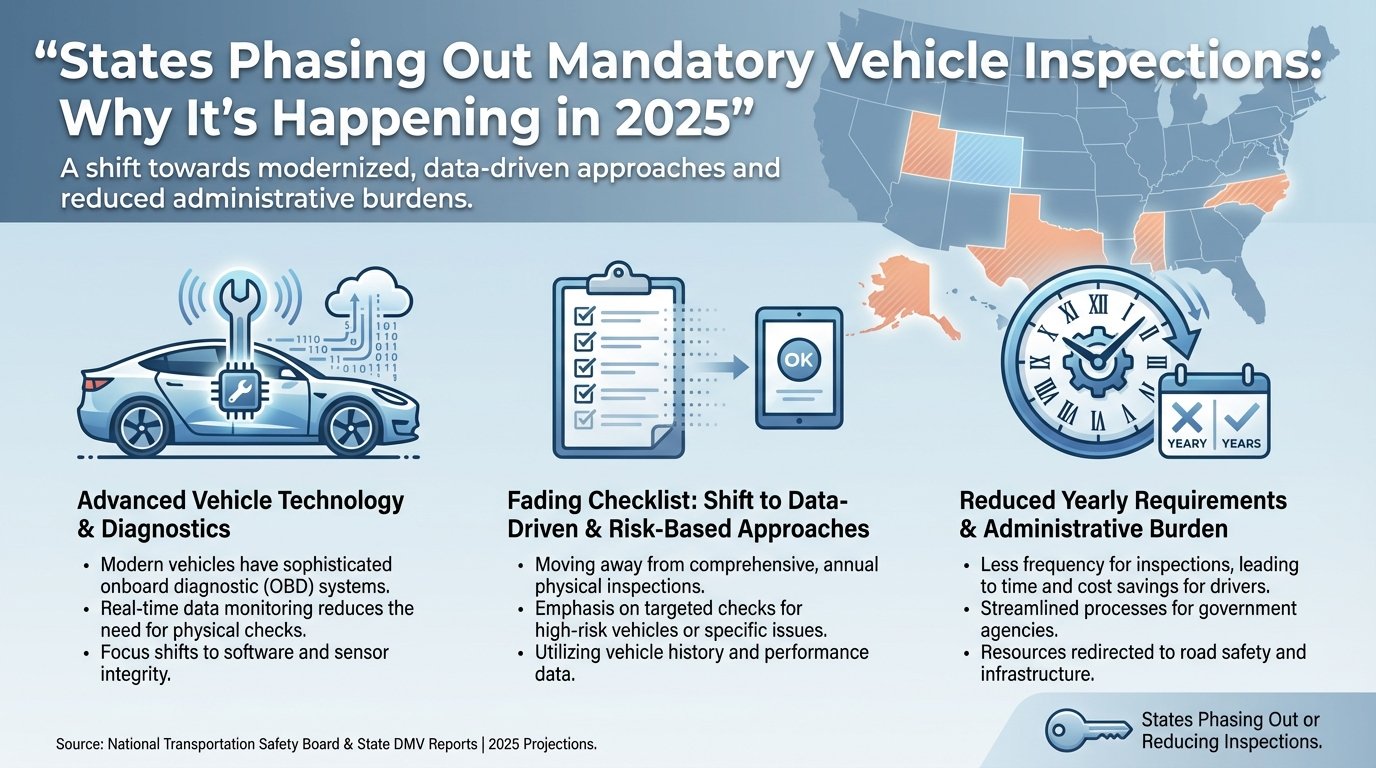
In recent years, a noticeable shift has taken place across the United States — several states are phasing out mandatory vehicle inspections. What was once a yearly ritual for millions of drivers is now being reconsidered, modernized, or completely eliminated.
As 2025 unfolds, more state governments are debating whether these inspections are still necessary in an era of advanced automotive technology and digital diagnostics. This article dives into the reasons behind states phasing out mandatory vehicle inspections, what it means for drivers, and how it could reshape vehicle ownership in the U.S.
1. The Growing Trend: States Phasing Out Mandatory Vehicle Inspections
The trend of states phasing out mandatory vehicle inspections isn’t new — but it has accelerated in recent years. Lawmakers argue that the original reasons for these inspections no longer apply in today’s environment.
Mandatory inspections were originally introduced to:
- Ensure vehicles were safe for public roads
- Reduce accidents caused by mechanical failures
- Monitor and reduce emissions
However, as cars have become safer, cleaner, and more technologically advanced, the need for routine state-run inspections has come into question.
2. Modern Cars Are Smarter and Safer
The biggest factor behind states phasing out mandatory vehicle inspections is technological advancement.
Modern vehicles come equipped with:
- Onboard diagnostics (OBD-II) systems that constantly monitor engine performance
- Advanced driver-assistance systems (ADAS) like lane departure warnings and automatic braking
- Tire pressure monitoring systems that alert drivers instantly
- Airbags, stability control, and collision sensors
Because cars now self-diagnose most issues, states argue that traditional inspection models — designed decades ago — have become outdated.
3. Questioning the Effectiveness of Inspections
Multiple studies suggest that inspection programs may no longer have a significant impact on road safety.
A report by the Government Accountability Office (GAO) found that states without mandatory inspections have similar accident rates as those that still require them.
For instance:
- South Carolina and Michigan eliminated inspections years ago and saw no measurable increase in accidents.
- Florida ended its inspection program in 2000, saving drivers millions annually without compromising safety.
These findings have influenced other states phasing out mandatory vehicle inspections in 2025.
4. Financial Relief for Drivers
Each year, vehicle inspections cost drivers between $10 and $50, not including repairs required to pass. For households with multiple vehicles, that adds up quickly.
By removing inspection mandates, states aim to:
- Lower vehicle ownership costs
- Simplify registration renewals
- Ease financial stress on low-income families
This driver-friendly reform has gained bipartisan support, especially in states seeking to reduce bureaucracy and make transportation more affordable.
5. Reducing Administrative Costs
Operating a vehicle inspection program costs state governments millions annually — including equipment maintenance, facility operations, and employee training.
When states phase out mandatory vehicle inspections, they can redirect resources toward:
- Road maintenance and infrastructure projects
- Highway patrol and safety awareness programs
- Electric vehicle incentives and charging station development
This redirection supports long-term transportation modernization efforts.
6. Environmental and Emissions Considerations
While some states phasing out mandatory vehicle inspections are removing safety checks, many are keeping emissions testing in specific regions.
States like Texas, Arizona, and Georgia still require emissions testing in urban areas to meet Clean Air Act standards.
Meanwhile, others are transitioning to digital emissions monitoring systems that rely on onboard diagnostics rather than physical testing.
The focus is shifting from physical inspections to data-driven pollution control — a move that aligns with cleaner vehicle technology and environmental goals.
7. States Leading the Change
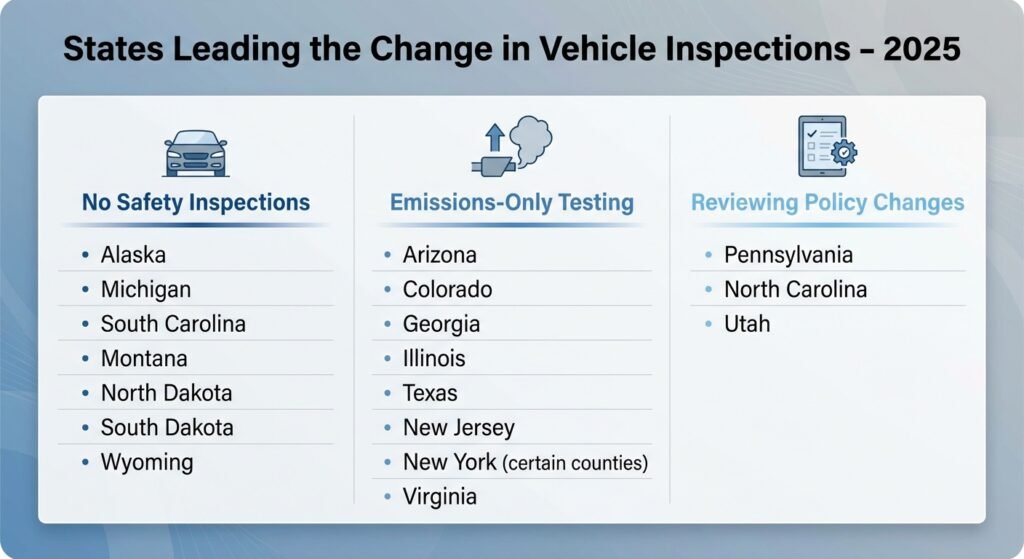
As of 2025, here’s how the landscape looks for states phasing out mandatory vehicle inspections:
No Safety Inspections Required:
- Alaska
- Michigan
- South Carolina
- Montana
- North Dakota
- South Dakota
- Wyoming
Emissions-Only Testing States:
- Arizona
- Colorado
- Georgia
- Illinois
- Texas
- New Jersey
- New York (certain counties)
- Virginia
States Reviewing Policy Changes:
- Pennsylvania (proposing every two years instead of annually)
- North Carolina (considering rural exemptions)
- Utah (evaluating digital alternatives)
This shift shows how different regions are adopting flexible, technology-driven inspection models.
8. Safety Concerns and Public Debate
Not everyone agrees with the move toward phasing out vehicle inspections. Critics worry that:
- Older or neglected vehicles might become unsafe
- Lack of oversight could lead to higher accident rates
- Environmental emissions could rise
However, supporters argue that modern self-diagnostic vehicles already flag safety and emission problems faster than annual inspections ever could.
Some states are introducing voluntary inspection programs for drivers who want an added safety check before long road trips or used-car sales.
9. Digital Transformation of Vehicle Oversight
The future of vehicle safety will likely rely on digital monitoring rather than physical inspection stations.
Upcoming innovations include:
- AI-powered diagnostic systems integrated with DMV databases
- Real-time telematics reporting from connected vehicles
- Automatic alerts for brake wear, emission faults, or malfunction indicators
These technologies will eventually make traditional inspections obsolete — providing continuous oversight instead of annual checks.
10. What Drivers Should Do Next
Even in states phasing out mandatory vehicle inspections, vehicle owners should remain proactive about safety. Here’s how:
- Follow your car’s maintenance schedule religiously
- Check lights, brakes, and tires monthly
- Use a handheld OBD-II scanner to catch early engine or emissions issues
- Keep maintenance records for insurance or resale purposes
Remember: just because the law no longer requires an inspection doesn’t mean you should skip regular vehicle care.
FAQs About States Phasing Out Mandatory Vehicle Inspections
Because modern cars are safer, inspections are costly, and data shows little impact on road safety.
Yes. Some states will maintain emissions testing, particularly in urban or high-pollution areas.
No. Some states are only reducing inspection frequency or converting to digital verification systems.
Insurance companies may require maintenance documentation but generally won’t penalize you for living in a no-inspection state.
Absolutely — many mechanics offer voluntary safety and emissions inspections for peace of mind.
Conclusion
The growing list of states phasing out mandatory vehicle inspections signals a new era for American drivers. This move reflects confidence in modern automotive technology, economic efficiency, and the belief that safety can be maintained without excessive regulation.
Still, the responsibility now shifts more heavily onto individual drivers to ensure their vehicles remain safe and environmentally compliant.
As cars become smarter and connected systems take over, the end of mandatory inspections might just be the beginning of a smarter, data-driven approach to vehicle safety.
More read : daliybusinessworld.com